Have you ever ignored persistent constipation, blood in your stool, or frequent changes in your bowel habits, thinking they would go away on their own? While these problems are often linked to common digestive disorders, they can also be early signs of colon cancer. Recognising these warning signs and seeking timely medical attention can make a significant difference, as early diagnosis often leads to more effective treatment and better recovery.
Many people are unaware of the symptoms of colon cancer until the disease has progressed. Knowing what to watch for can help you take action before complications develop. If you are looking for expert Colon Cancer Treatment in Coimbatore, consulting an experienced gastrointestinal surgeon is an important first step. With over 18 years of experience, Dr. K. Balu provides comprehensive diagnosis and advanced treatment at Sun Specialty Clinic, helping patients receive personalised care based on their condition.
In this blog, we’ll discuss the symptoms of colon cancer you should never ignore, what may cause this condition, when it’s time to consult a doctor, and the treatment options available to help you make informed decisions about your health.
What Is Colon Cancer?
Colon cancer is a type of cancer that begins in the large intestine (colon), which is the final part of the digestive system. In many cases, it starts as small, non-cancerous growths called colon polyps. Over time, some of these polyps may develop into cancer if they are not detected and removed.
Colon cancer can affect both men and women, especially individuals above the age of 45. However, younger adults can also develop the condition, making awareness of colon cancer symptoms more important than ever.
Why Early Detection of Colon Cancer Matters?
Early detection significantly improves the chances of successful treatment. When diagnosed in its early stages, colon cancer can often be treated with minimally invasive surgery and may not require extensive treatment.
Benefits of early diagnosis include:
- Higher treatment success rates
- Less extensive surgery
- Faster recovery
- Lower risk of cancer spreading to other organs
- Better long-term quality of life
Ignoring the warning signs of colon cancer can delay diagnosis and allow the disease to progress. Regular health check-ups and timely screening are essential, particularly for people with a family history of colorectal cancer.
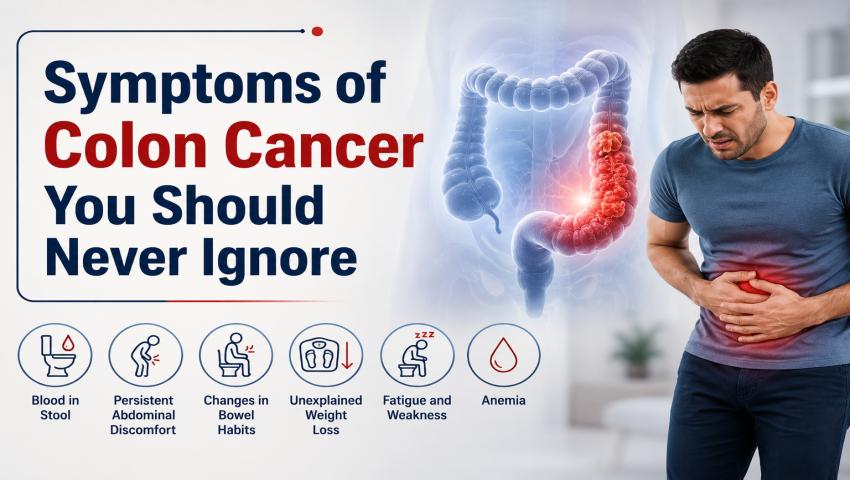
Symptoms of Colon Cancer You Should Never Ignore:
Recognising the common symptoms of colorectal cancer can help you seek medical attention before the disease advances.
Persistent Changes in Bowel Habits:
One of the earliest signs of colon cancer is a change in your normal bowel routine. This may include:
- Diarrhoea lasting for several days
- Persistent constipation
- Alternating diarrhoea and constipation
- Narrow or pencil-thin stools
If these symptoms continue for more than two weeks, consult a specialist.
Blood in Stool or Rectal Bleeding:
Blood in the stool should never be ignored. It may appear as:
- Bright red blood after passing stool
- Dark or black stools
- Hidden blood detected during stool tests
Although piles can also cause rectal bleeding, understanding the difference between hemorrhoids and colon cancer symptoms is important. A proper medical evaluation is necessary to identify the exact cause.
Persistent Abdominal Pain:
Frequent abdominal pain, bloating, gas, or cramps that do not improve may indicate an underlying problem. Pain associated with colon cancer often becomes persistent rather than occasional.
Feeling That the Bowel Doesn’t Empty Completely:
Some patients experience a constant urge to pass stool even after having a bowel movement. This feeling of incomplete evacuation should not be overlooked.
Unexplained Weight Loss:
Losing weight without changing your diet or exercise routine can be one of the early symptoms of colon cancer in adults. Cancer cells consume energy, which may lead to unexpected weight loss.
Fatigue and Weakness:
Slow bleeding from the colon may lead to iron deficiency anaemia, causing:
- Constant tiredness
- Weakness
- Shortness of breath
- Dizziness
Persistent Bloating:
Ongoing abdominal bloating or fullness that doesn’t improve may indicate changes within the colon and should be evaluated.
Nausea and Vomiting:
In advanced cases, a tumour may partially block the intestine, resulting in nausea, vomiting, and severe abdominal discomfort. This requires immediate medical attention.
Learning how to identify colon cancer symptoms early can help improve treatment outcomes and prevent complications.
What Causes Colon Cancer?
The exact cause of colon cancer is not always known, but several factors can increase the risk.
Common risk factors include:
- Increasing age, especially after 45 years
- Family history of colon cancer
- Colon polyps
- Inflammatory bowel disease (Crohn’s disease or ulcerative colitis)
- Obesity
- Smoking
- Excessive alcohol consumption
- A diet high in processed or red meat
- Lack of physical activity
Following colon cancer screening recommendations is especially important if you have any of these risk factors.
When Should You See a Doctor?
Many people wonder when to see a doctor for colon cancer symptoms.
You should consult a specialist if you experience:
- Blood in the stool
- Changes in bowel habits lasting more than two weeks
- Persistent abdominal pain
- Unexplained weight loss
- Ongoing fatigue
- Pencil-thin stools
- Recurrent bloating
People experiencing colon cancer symptoms after age 45 should not delay medical evaluation. Early consultation can help identify whether the symptoms are due to colon cancer or another digestive condition.
Colon Cancer Treatment Options at Sun Specialty Clinic:
- Surgical Removal (Colectomy): Removes the cancerous section of the colon along with nearby lymph nodes.
- Laparoscopic Colon Surgery: A minimally invasive procedure that uses small incisions for faster recovery and less pain.
- Robotic-Assisted Colon Surgery: Offers greater precision, flexibility, and improved control during complex procedures.
- Chemotherapy: Uses anti-cancer medicines to destroy cancer cells or reduce the risk of recurrence after surgery.
- Radiation Therapy: May be recommended in selected cases to shrink tumours or destroy remaining cancer cells.
- Targeted Therapy & Immunotherapy: Advanced treatments that target specific cancer cells or strengthen the body’s immune response.
- Personalised Treatment Planning: Every treatment plan is tailored based on the cancer stage, overall health, and individual patient needs.
Why Choose Dr. K. Balu for Colon Cancer Treatment in Coimbatore?
If you are looking for expert Colon Cancer Treatment in Coimbatore, Dr. K. Balu offers comprehensive care from diagnosis to advanced surgical treatment.
Patients choose Dr. K. Balu because of:
- Over 18 years of surgical experience
- Expertise in gastrointestinal and colorectal surgery
- Advanced laparoscopic and robotic surgical techniques
- Personalised treatment plans
- Patient-centred care at Sun Specialty Clinic
Known as one of the best gastroenterologists in Coimbatore, Dr. K. Balu specialises in managing complex digestive disorders and colorectal conditions. His expertise as the Best Laparoscopic Surgeon in Coimbatore enables patients to benefit from minimally invasive procedures with faster recovery. Whether you require evaluation for early signs of colon cancer or advanced surgical care, timely consultation can make a significant difference.
Conclusion:
Ignoring persistent digestive symptoms can delay the diagnosis of colon cancer. While many symptoms may be caused by less serious conditions, signs such as blood in the stool, unexplained weight loss, changes in bowel habits, or persistent abdominal pain should always be evaluated by a specialist.
Recognising the symptoms of colon cancer, you should never ignore them and seeking medical advice at the right time can improve treatment success and overall quality of life. If you or a loved one experiences these symptoms, consult an experienced gastrointestinal surgeon for a proper diagnosis and personalised treatment plan.
Frequently Asked Questions About Colon Cancer Symptoms:
Seriousness depends on the stage. Early-stage (Stage 1-2) colon cancer is highly treatable with surgery alone. Advanced stages need combined treatment like chemotherapy along with surgery.
Yes, it usually develops over several years, often starting as a polyp. This slow growth makes regular screening effective for early detection.
Yes, especially when detected early. Long-term outcomes depend on the stage at diagnosis and regular follow-up care.
Yes. A growing tumour can narrow the colon, causing pencil-thin stools and pelvic or lower abdominal pain.