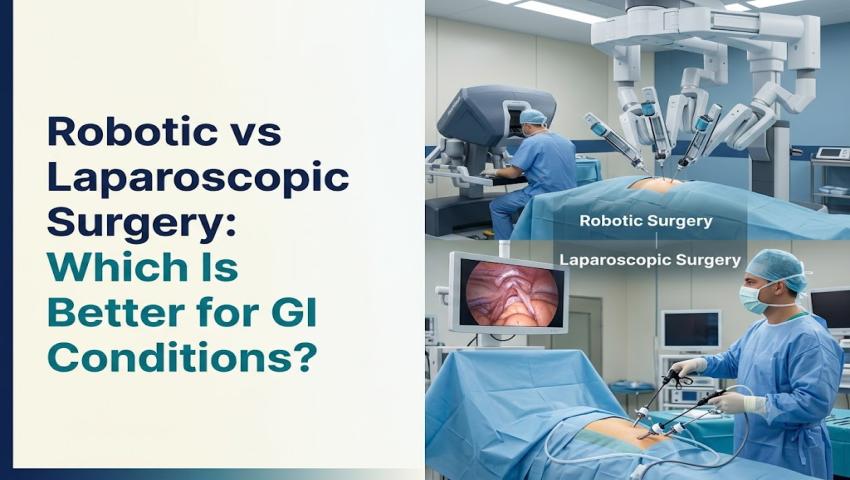
If you have been advised to have surgery for a gallbladder stone, hernia, or any other digestive system problem, your doctor may have given you two options: laparoscopic surgery or robotic surgery. Both are minimally invasive techniques that use small incisions, but the technology, precision, and recovery experience can be quite different. So the question most patients ask is simple — for GI conditions, which is actually better: robotic vs laparoscopic surgery?
Dr. K. Balu, who practices at Sun Specialty Clinic, Coimbatore, is regarded as one of the best laparoscopic surgeons in Coimbatore, with equal expertise in robotic-assisted procedures. In this blog, we break down robotic surgery vs. laparoscopic surgery in simple terms, so you can have an informed conversation with your surgeon before deciding on the right approach.
What Is Laparoscopic Surgery?
Laparoscopic surgery for GI conditions is a minimally invasive technique where the surgeon makes a few small incisions, inserts a camera (laparoscope), and operates using long, thin instruments controlled by hand while viewing the area on a monitor — a well-established laparoscopic technique used for decades in gallbladder removal, appendectomy, and hernia repair, which is one reason Dr. K Balu is recommended as the Best Laparoscopic Surgeon in Coimbatore for routine and moderately complex GI procedures.
What Is Robotic Surgery?
Robotic surgery for GI conditions takes minimally invasive surgery a step further — the surgeon sits at a console and controls robotic arms guided by a magnified 3D visualization system such as the Da Vinci surgical system, translating every hand movement into precise, tremor-free motion.
This robotic GI surgery is especially useful for tight, delicate procedures like rectal or advanced bariatric surgery, which is why those recognised as the Best Robotic GI Surgeon in Coimbatore can manage complex GI surgery cases with greater accuracy.
Robotic vs Laparoscopic Surgery: Key Differences
Understanding the difference between robotic and laparoscopic surgery becomes easier when compared side by side:
Patients consulting a Best Gastroenterologist in Coimbatore are often guided through this comparison based on their specific diagnosis, rather than a one-size-fits-all recommendation.
Benefits of Laparoscopic Surgery:
Laparoscopic surgery benefits make it a preferred first choice for many standard GI procedures:
- Lower overall treatment cost compared to robotic options
- Widely available across most hospitals, including smaller cities
- Decades of proven outcomes and long-term safety data
- Small incision surgery leading to minimal scarring
- Shorter operating time for straightforward cases
For gallbladder, appendix, and simple hernia surgeries, this remains one of the most trusted approaches — which is why the Best Laparoscopic Surgeon in Coimbatore is often the first recommendation for such conditions.
Benefits of Robotic Surgery:
Robotic-assisted surgery offers distinct advantages, particularly for advanced or delicate GI conditions:
- Superior precision through 3D visualization and magnified view
- Greater dexterity, allowing surgeons to operate in narrow spaces
- Reduced blood loss and less trauma to surrounding tissue in complex GI surgery
- Better outcomes reported in select procedures such as rectal cancer surgery, advanced hernia repair technique, and bariatric surgery technique
- Faster return to normal activity in many robotic-assisted cases
This is why patients with complicated GI conditions are frequently referred to the Best Robotic GI Surgeon in Coimbatore for a second opinion before finalising their surgical plan.
Which Is Better for Which GI Conditions?
There is no single answer to what is the best surgery for GI conditions — it depends entirely on the diagnosis:
- Gallbladder stones, appendicitis, simple hernia: Laparoscopic surgery is usually sufficient and cost-effective.
- Rectal cancer, advanced hernia, complex bariatric cases: Robotic surgery may offer better precision and outcomes.
- Conditions requiring extensive internal suturing or dissection: Robotic GI surgery often has an edge due to enhanced control.
This is exactly why patients are encouraged to consult a Best Gastroenterologist in Coimbatore, who can evaluate the specific condition and recommend between minimally invasive GI surgery options rather than assuming robotic is always better than laparoscopic, or vice versa. Both fall under gastrointestinal surgery options that are safe and effective when matched correctly to the case.
Recovery Time Comparison:
GI surgery recovery time varies slightly between the two techniques:
- Laparoscopic surgery: Typically 1–2 weeks for return to normal routine, with hospital stay of 1–3 days.
- Robotic surgery: Often comparable or slightly quicker post-surgery recovery in complex cases, due to reduced tissue trauma, though hospital stay duration is largely similar.
In both cases, actual recovery depends on the patient’s overall health, age, and the complexity of the underlying GI condition.
Cost Comparison: Robotic vs Laparoscopic Surgery
One of the biggest deciding factors for patients is robotic surgery vs laparoscopic surgery cost:
- Laparoscopic surgery is generally more affordable, as the equipment and setup costs are lower.
- Robotic surgery cost in India tends to be higher, owing to the advanced surgical technology, machine maintenance, and specialised training involved.
- Insurance coverage for robotic procedures varies by policy and hospital, so it is best to confirm this in advance.
While cost is an important factor, it should be weighed alongside the surgical outcome expected for your specific GI condition.
How Dr. K. Balu Decides the Right Approach?
With 18+ years of experience and access to both laparoscopic and robotic surgical systems at Sun Specialty Clinic, Coimbatore, Dr. K. Balu evaluates each case individually based on:
- Complexity and location of the GI condition
- Patient’s overall health and fitness for surgery
- Expected surgical outcomes with each technique
- Patient’s cost preferences and insurance coverage
This case-by-case approach has established Dr. K Balu’s reputation across Coimbatore—as the Best Laparoscopic Surgeon in Coimbatore for standard procedures and, increasingly, as the Best Robotic GI Surgeon in Coimbatore for advanced cases.
Why Choose Dr. K. Balu in Coimbatore?

Dr. K. Balu
Advance Laparoscopic, Robotic, Colorectal Surgeon & LASER Proctologist
- 18+ years of experience in gastrointestinal and minimally invasive surgery
- Expertise in both laparoscopic and robotic-assisted GI procedures
- Personalised treatment plans based on the complexity of each condition
- Access to advanced surgical technology at Sun Specialty Clinic, Coimbatore
- Trusted by patients as the Best Gastroenterologist in Coimbatore for complex GI cases
- Transparent guidance on cost, recovery, and the right surgical approach for each patient
Conclusion:
When it comes to robotic vs laparoscopic surgery, there is no universal winner — the right choice depends on your specific GI condition, its complexity, and your personal circumstances. Laparoscopic surgery remains a reliable, cost-effective option for routine procedures, while robotic surgery offers added precision for complex cases.
The best way to decide which is better- robotic or laparoscopic surgery for your condition is to consult an experienced specialist. Book a consultation with Dr. K. Balu at Sun Specialty Clinic, Coimbatore, to get a personalised recommendation based on your diagnosis.
Frequently Asked Questions:
Not always. Robotic surgery offers better precision and 3D vision, which helps in complex cases like rectal cancer or advanced bariatric surgery. For routine procedures such as gallbladder removal or appendectomy, laparoscopic surgery gives equally good results at a lower cost.
Both are safe when performed by an experienced surgeon. Safety depends more on the surgeon’s training, the patient’s overall health, and the complexity of the condition than on the technique alone.
Robotic surgery cost is higher, and it is not available in every hospital. Setup time can also be longer, and the surgeon does not get the same touch feedback as in hands-on techniques. For simple procedures, these factors may outweigh the benefits.
In narrow areas like the pelvis, the robotic arms rotate more freely than human wrists. The magnified 3D view helps in delicate dissection and suturing, which is why many surgeons prefer it for complex GI surgery.
Open surgery needs one large cut, whereas robotic surgery uses a few small incisions. This generally means less pain, less scarring, and a quicker return to routine activities.
No. Recovery depends on the patient’s age, health, and the condition being treated. In complex cases, robotic surgery may allow slightly faster recovery, but for routine procedures, laparoscopic recovery is usually similar.
The right choice depends on your diagnosis, its complexity, your health, and your budget. A consultation with Dr. K. Balu at Sun Specialty Clinic, Coimbatore, helps you understand which option suits your condition.