Colon polyps are extremely common, and in most cases, they cause no symptoms at all — which is exactly what makes them so easy to ignore until it’s too late. If you’ve recently been told during a checkup that you have colon polyps, or you’re researching colon polyp symptoms because something felt off, you’re probably wondering the same thing most patients ask: can colon polyps turn into cancer, and when should they be removed? The honest answer is — it depends on the type, size, and how long they’ve been growing.
Dr. K. Balu, a surgical gastroenterologist at Sun Specialty Clinic, Coimbatore, has treated hundreds of patients with colon polyps — from harmless growths that needed only monitoring to precancerous polyps that required timely removal. He also regularly treats related colorectal conditions such as Rectal Prolapse in Coimbatore.
In this blog, we’ll break down what colon polyps actually are, which ones carry cancer risk, and the exact point at which removal becomes necessary.
What Are Colon Polyps?
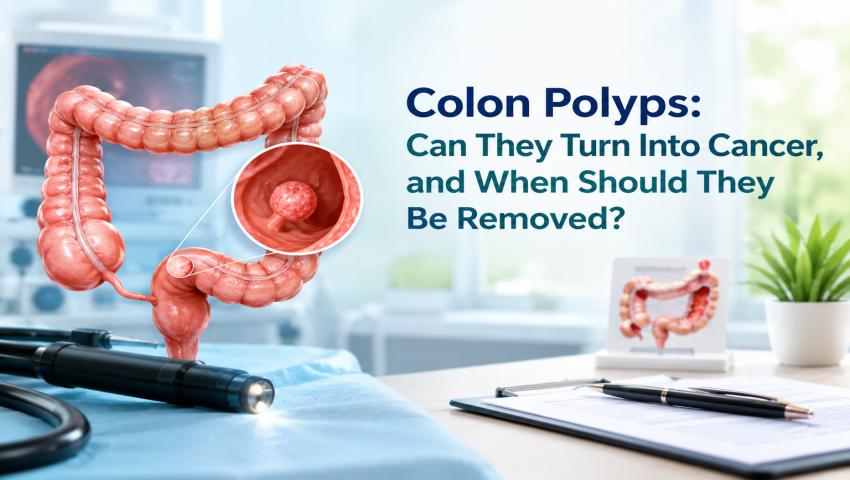
Colon polyps are small clumps of cells that form on the inner lining of the colon or rectum. Most people who have them don’t even know, because colon polyp symptoms are often absent in the early stages. They can range from a few millimetres to a couple of centimetres, and while most remain harmless, some types of colon polyps carry a real risk of turning cancerous over time.
- Adenomatous polyps — the most common type, and the ones with the highest cancer potential
- Hyperplastic polyps — usually small and low-risk
- Sessile serrated polyps — flatter in shape, harder to detect, but can still progress.
- Inflammatory polyps — often linked to conditions like ulcerative colitis
Can Colon Polyps Turn Into Cancer?
This is the question most patients want answered first, and yes — colon polyps and cancer risk are directly linked, though not every polyp becomes cancerous. One of the most common patient concerns is colon polyp cancer risk, especially when a polyp is found unexpectedly during a routine colonoscopy.
Adenomatous polyps follow what doctors call the “adenoma-to-carcinoma sequence” — a slow transformation from a normal-looking growth to precancerous cells, and eventually, in some cases, to colorectal cancer. This process usually takes several years, sometimes even a decade, which is exactly why regular screening matters. Not every polyp is cause for alarm; the real concern lies with untreated adenomatous or sessile serrated polyps left to grow unchecked.
Risk Factors That Increase Cancer Potential:
Understanding the common causes of colon polyps helps with early prevention. Certain factors raise the colon polyp size cancer risk and shouldn’t be ignored:
- Polyp size larger than 1 cm
- Multiple polyps found in a single colonoscopy
- Family history of colon polyps or colorectal cancer
- Genetic conditions like Familial Adenomatous Polyposis (FAP) or Lynch syndrome
- Age above 45–50
- Smoking, obesity, and a diet low in fibre, high in red or processed meat
If you fall into one or more of these categories, don’t wait for symptoms — talk to a specialist early.
How Are Colon Polyps Diagnosed?
A colonoscopy remains the gold standard for detecting colon polyps, allowing the doctor to view the entire colon and remove polyps in the same procedure. Other options include stool-based tests and CT colonography, though these are mainly used for screening rather than confirmation.
Colonoscopy Coimbatore clinics, including Sun Specialty Clinic, use advanced imaging to catch even small or flat polyps that are otherwise easy to miss — one reason patients regard Dr. K. Balu among the Best Gastroenterologists in Coimbatore for thorough, precise screening.
When Should Colon Polyps Be Removed?
This brings us to the core question — when to remove colon polyps. As a general rule:
- Any adenomatous polyp is removed as soon as it’s found, regardless of symptoms
- Polyps larger than 1 cm are prioritised due to higher cancer potential
- Sessile serrated polyps are removed promptly since they’re harder to track visually
- Small hyperplastic polyps may sometimes just be monitored, depending on location and appearance
In most cases, colon polyp removal happens during the same colonoscopy session used for diagnosis.
Colon Polyp Removal Procedure — What to Expect?
The most common method is a polypectomy, done through the colonoscope itself — no external incision needed. Most colonoscopy polyp removal procedures take 30–45 minutes. For larger or more complex growths, a colon polyp removal surgery using advanced laparoscopic or endoscopic techniques may be required. This precision-driven approach is one reason patients consider Dr. K. Balu among the Best GI surgeons in Coimbatore for polyp removal cases.
Most patients go home the same day, with mild discomfort for a day or two and a return to normal activity within a week.
Prevention & Screening Recommendations:
While not all colon polyps can be prevented, the risk can be meaningfully reduced:
- Start screening colonoscopies at age 45, or earlier with family history
- Eat a fibre-rich diet with plenty of fruits and vegetables
- Limit red and processed meat
- Maintain a healthy weight and stay physically active
- Avoid smoking and limit alcohol
Regular screening is still the single most effective colon polyp treatment strategy — because polyps removed early seldom turn into cancer.
Why Choose Dr. K. Balu for Colon Polyp Treatment in Coimbatore?
When it comes to colon polyps, patients trust experience and precision. Dr. K. Balu brings over 18 years of surgical gastroenterology experience at Sun Specialty Clinic and is regarded as the best doctor for colon polyp treatment in Coimbatore, whom Coimbatore has come to rely on for advanced colonoscopy and polyp removal. Patients often come to him not just for polyp removal, but for complete colorectal evaluation — including Rectal Prolapse, piles, fissures, and fistulas.
Book an Appointment:
If you’ve been putting off a colonoscopy, or a polyp was mentioned during your last checkup, don’t leave it unchecked. Whether you need a routine colonoscopy or advanced polyp removal, booking a consultation with the Best GI Surgeon in Coimbatore and Best Gastroenterologist in Coimbatore at Sun Specialty Clinic is just a call away.
Early detection remains the most reliable way to prevent colon polyps from ever becoming a serious concern. Call 099447 27778 to book your appointment today.
Frequently Asked Questions
Yes, but not all of them do. Adenomatous and sessile serrated polyps carry a risk, while most hyperplastic polyps are low-risk.
Usually 5 to 10 years. This is why regular screening can catch and remove a polyp before it becomes cancer.
Most polyps cause no symptoms. Larger ones may cause blood in the stool, a change in bowel habits or abdominal pain.
Adenomatous and sessile serrated polyps should be removed as soon as they are found. Polyps larger than 1 cm are prioritised.
It can keep growing and, in some types, turn into cancer. Larger polyps may also cause bleeding or blockage.