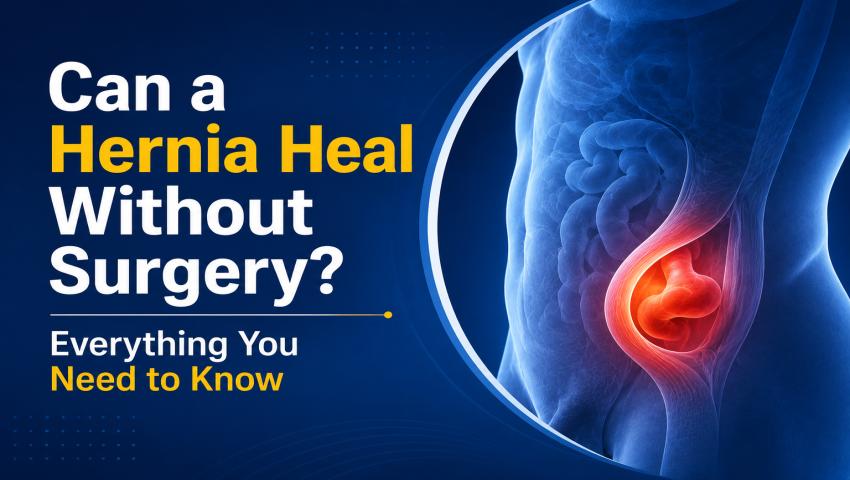
Noticed a soft lump in your abdomen or groin that bulges when you cough, lift something heavy, or stand for long periods? This could be a sign of a hernia — and you’re probably searching for one thing: can a hernia heal without surgery, or will it go away on its own with time?
It’s one of the most common questions patients bring to their gastroenterologist, and understandably so — nobody wants to jump straight into surgery if there’s another way to treat a hernia.
At Sun Specialty Clinic, Dr. K. Balu, with 18 years of experience in advanced gastrointestinal and minimally invasive surgery, offers trusted Hernia Treatment in Coimbatore and has guided thousands of patients searching for a hernia remedy without surgery through this exact question. In this blog, we’ll give you a clear, honest, and easy-to-understand answer — backed by medical facts, not assumptions.
What Is a Hernia?
A hernia happens when an internal organ or tissue pushes through a weak spot in the muscle wall that’s normally strong enough to hold it in place. This weak spot can develop gradually over years, or suddenly due to heavy strain.
A proper hernia diagnosis typically involves a physical examination by a Gastroenterologist in Coimbatore, and in some cases, an ultrasound or CT scan to check the exact size, location, and contents of the hernia.
Can a Hernia Heal Without Surgery? — Short Answer: No
Once a gap forms in the abdominal wall, the body has no natural mechanism to close it back up. Unlike a cut or wound, muscle and connective tissue don’t regenerate or “knit together” on their own.
That said, doctors sometimes recommend a temporary hernia treatment without surgery approach, especially for small, symptom-free hernias. This is meant to manage the condition, not cure it.
Non-Surgical Approach:
- Hernia support belt/truss
- Weight management
- Avoiding heavy lifting
- Treating chronic cough or constipation
- Regular monitoring
What It Actually Does?
- Reduces bulge movement, offers temporary comfort
- Reduces pressure on the abdominal wall
- Slows down progression of the hernia
- Reduces repeated strain on the weak spot
- Helps catch complications early
Important: None of these options close the actual defect. They only reduce symptoms and slow down progression— which is why so many patients searching for a hernia remedy without surgery are often disappointed to learn there isn’t a permanent one. Even a well-managed hernia treatment without surgery plan only delays the need for repair; it does not replace it.
Why Doesn't a Hernia Heal on Its Own?
This is where a lot of confusion comes from. Many people searching for a hernia remedy without surgery assume that with enough rest, the body will “fix” the weak spot the way it heals a wound. But hernias don’t work that way.
The Anatomy Behind It:
Your abdominal wall is made of layers of muscle and connective tissue (fascia). When this fascia tears or weakens, it doesn’t have the blood supply or healing response that skin has. There’s no scab, no regrowth — just an open gap that stays open unless it’s physically repaired.
Why It Often Gets Worse Over Time?
Everyday activities — walking, coughing, laughing, digestion — put constant pressure on the abdominal wall. This pressure pushes against the weak spot repeatedly, which is why hernias tend to gradually increase in size rather than shrink.
So if you’re asking whether a hernia cures itself with time, rest, or home remedies — the medical answer is no. The only way to truly close the gap is through hernia repair, most commonly done using surgical mesh to reinforce the weakened area and prevent recurrence.
When Is Surgery the Only Option for a Hernia?
Not every hernia needs immediate surgery, but certain signs mean it’s time to stop waiting:
- The hernia is visibly growing in size
- Pain is increasing or becoming constant
- Risk of incarceration — where the tissue gets stuck and can’t be pushed back in
- Risk of strangulation — a medical emergency where blood supply to the trapped tissue is cut off
- The hernia is interfering with work, exercise, or daily movement
- Sudden nausea, vomiting, or severe abdominal pain
At this stage, it’s important to get evaluated by the best hernia surgeon in Coimbatore to decide the right course of treatment.
Surgical Hernia Treatment Options:
Type of Surgery:
- Open Hernia Surgery
- Laparoscopic Hernia Surgery
- Robotic Hernia Surgery
Best Suited For:
- Larger or complicated hernias
- Faster recovery, minimal scarring, most common approach today
- High precision, ideal for complex or recurrent hernias
Each of these hernia treatment options aims to do one thing — close the defect permanently using mesh reinforcement, reducing the chances of the hernia coming back. For complex or recurrent cases, Dr. K. Balu also offers robotic hernia surgery in Coimbatore, known for its precision and faster recovery.
Can You Live with a Hernia Without Surgery?
Technically, yes. Many patients live with a small, symptom-free hernia for months, sometimes years, without immediate danger.
But here’s the catch — living with an untreated hernia means living with a slowly progressing condition:
- The bulge and hernia pain usually increase gradually over time
- Risk of incarceration and strangulation rises the longer it’s left untreated
- A planned, low-risk surgery can turn into an emergency operation if complications develop
- Daily activities may become increasingly limited due to discomfort
If you choose to delay surgery, regular monitoring by a doctor is essential — not optional.
Common Myths About Hernias and Surgery:
Dr. K. Balu's Expertise in Hernia & Laparoscopic Surgery:
When it comes to hernia repair, the surgeon’s experience directly impacts recovery time and recurrence risk. Dr. K. Balu brings 18 years of dedicated experience in gastrointestinal and laparoscopic surgery, having successfully treated a wide range of hernia cases — from straightforward inguinal hernias to complex, recurrent ones.
What sets his approach apart?
- Specialised expertise in minimally invasive and laparoscopic hernia repair, resulting in smaller incisions, less pain, and faster recovery
- Advanced surgical techniques, including robotic-assisted procedures for complex or recurrent hernias requiring greater precision
- Personalised treatment plans based on each patient’s hernia type, size, and overall health — not a one-size-fits-all approach
- Focus on long-term outcomes, with proper mesh placement techniques that significantly reduce the chances of recurrence
- Comprehensive pre- and post-operative care, ensuring patients understand every step of their treatment journey
Whether it’s a routine hernia repair or a complicated case requiring advanced surgical planning, Dr. K. Balu’s experience as a laparoscopic surgeon ensures patients receive safe, effective, and minimally invasive care at every stage.
Conclusion:
A hernia remedy without surgery may sound appealing, but the medical reality is simple: a hernia doesn’t heal on its own, and surgery remains the only way to close the defect and prevent complications.
With early diagnosis, this is a completely manageable condition. Delaying it only increases the risk of complications later on. If you’re experiencing hernia symptoms, Dr. K. Balu at Sun Specialty Clinic offers advanced, minimally invasive surgical care.
For expert laparoscopic hernia surgery in Coimbatore, consulting the best hernia surgeon in Coimbatore early can help you avoid emergencies and recover faster. Book an appointment today and get the right guidance before it becomes an emergency.
Frequently Asked Questions:
No. Hernia groin treatment without surgery — such as support belts and activity changes — can only manage symptoms temporarily. Left untreated, groin hernias tend to enlarge and carry a higher risk of incarceration over time.
No. Unlike in infants, where small umbilical hernias sometimes close naturally, treatment of umbilical hernia in adults without surgery is not possible — surgical closure is needed to prevent complications.
Yes, small symptom-free hernias can be lived with for a while, but regular monitoring is essential as the risk of complications increases over time.
There’s no fixed timeline — it depends on size and symptoms, but hernias generally worsen over time and should be evaluated by a doctor as soon as possible.
A doctor may manually push a reducible hernia back in place temporarily, but this is not a cure. Surgical repair is needed to close the defect permanently.
Yes, a family history of hernias can increase your risk due to inherited weakness in the connective tissue and abdominal wall.