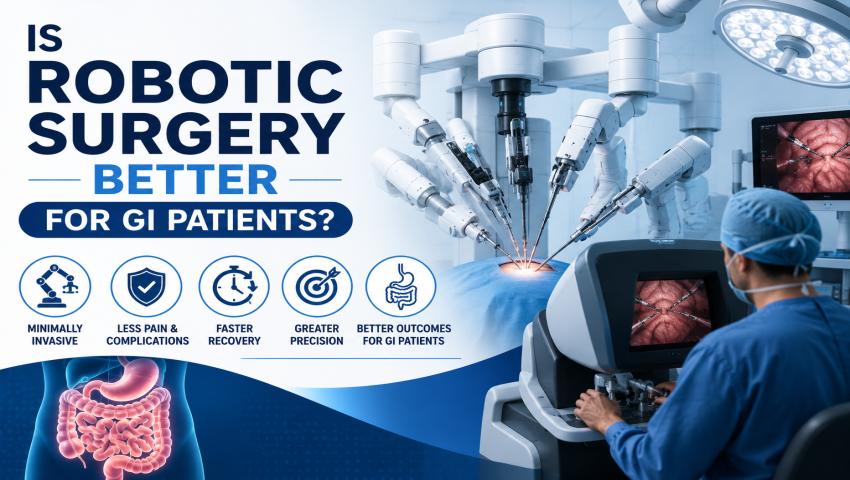
Is robotic surgery really better for GI patients, or is it simply a newer way of performing surgery? This is a common question among patients considering treatment for gastrointestinal conditions. While laparoscopic surgery remains an effective option, robotic technology has introduced greater precision and control in many procedures.
Robotic surgery has brought significant advances in the treatment of gastrointestinal disorders. As a Robotic GI Surgeon in Coimbatore, Dr. K. Balu frequently evaluates patients for advanced minimally invasive procedures and is often asked whether robotic surgery is truly better than traditional or laparoscopic surgery. In many cases, the answer is yes, especially for selected complex procedures where precision, control, and advanced technology can make a meaningful difference.
For patients exploring treatment from the best gastroenterologist in Coimbatore, understanding the benefits of Robotic GI Surgery is important. While conventional surgery and laparoscopy remain valuable treatment options, robotic-assisted procedures have expanded what is possible in modern Minimally Invasive GI Surgery. For many patients, robotic surgery may offer safer dissection, better surgical accuracy, reduced trauma to surrounding tissues, and a smoother recovery.
What Is Robotic GI Surgery?
Robotic GI surgery is an advanced form of Minimally Invasive GI Surgery where the surgeon controls robotic instruments to perform highly precise procedures through small incisions. The robotic system does not operate on its own; every movement is directed by the surgeon.
It also provides magnified 3D visualization and improved control, which can be helpful in complex gastrointestinal procedures.
Robotic surgery may be used for:
- Colorectal surgery
- GI cancer surgery
- Hernia repair
- Gallbladder surgery
- Complex abdominal procedures
Benefits of Robotic Surgery for GI Patients:
1. Greater Precision During Surgery:
One of the biggest advantages of robotic surgery is enhanced precision. The robotic system allows highly controlled and refined movements, which can be beneficial when operating near delicate nerves, blood vessels, or vital organs.
In complex gastrointestinal procedures, this precision may help improve surgical accuracy and support better preservation of surrounding tissues.
2. Better Visualization for Complex Procedures:
Robotic systems provide magnified 3D high-definition views of the surgical area. This improved visualization allows the surgeon to see anatomical structures more clearly than in many conventional approaches.
This can be particularly valuable in difficult areas such as the pelvis or deep abdominal spaces, where visibility can affect surgical planning and execution.
3. Smaller Incisions and Reduced Tissue Trauma:
Like other Minimally Invasive GI Surgery techniques, robotic surgery uses small incisions rather than large open cuts. Smaller incisions often result in less trauma to tissues, reduced scarring, and a more comfortable recovery.
This may also contribute to reduced wound-related complications in suitable cases.
4. Less Post-Operative Pain:
Because robotic surgery is minimally invasive, many patients experience less pain after surgery compared with open procedures.
Reduced discomfort can support earlier mobilization, faster recovery, and improved post-operative experience.
5. Reduced Blood Loss During Surgery:
In many procedures, the enhanced precision and control offered by robotic systems may help reduce blood loss during surgery.
This can be especially important in complex operations where minimizing surgical trauma is beneficial.
6. Faster Recovery and Earlier Return to Routine Activities:
Many patients undergoing robotic surgery recover more quickly than those having open surgery.
Benefits may include:
- Shorter hospital stay
- Earlier walking and mobilization
- Faster return to daily activities
- Quicker recovery overall
Recovery varies from patient to patient, but minimally invasive approaches often support smoother healing.
7. Improved Access in Difficult Anatomical Areas:
Certain GI procedures involve operating in narrow or technically challenging spaces. Robotic systems may offer improved access and flexibility in these situations.
This can be especially useful in selected colorectal and complex abdominal surgeries.
Is Robotic Surgery Better Than Laparoscopic Surgery?
This is a common question. Both robotic and laparoscopic surgery are effective in Minimally Invasive GI Surgery, and both have important roles.
For many routine procedures, laparoscopy remains an excellent option. However, robotic surgery may offer advantages in selected complex cases because of:
- Enhanced dexterity
- Better visualization
- Greater precision
- Improved access in difficult areas
That said, robotic surgery is not automatically “better” for every patient. The right technique depends on the disease, anatomy, surgical complexity, and overall patient factors.
The focus should always be on choosing the approach that offers the safest and most effective outcome.
Who May Benefit from Robotic GI Surgery?
Robotic surgery may be considered in patients with:
- Colorectal disorders
- GI cancers
- Complex hernias
- Gallbladder disease
- Selected abdominal procedures
Patients requiring advanced precision or surgery in difficult anatomical areas may particularly benefit. A detailed evaluation helps determine suitability.
Is Robotic Surgery Safe?
When performed by an experienced surgeon, robotic surgery is considered a safe and effective approach for appropriately selected patients.
Like any surgery, it carries risks, but careful planning, proper patient selection, and experienced surgical execution help optimize outcomes.
As with all procedures, the surgeon’s expertise is a key factor in success.
Is Robotic Surgery a Good Idea?
For many GI patients, robotic surgery can be an excellent treatment option when performed for the right condition and in appropriately selected cases. The advanced technology may offer benefits such as greater precision, smaller incisions, reduced post-operative discomfort, and faster recovery.
However, robotic surgery is not necessarily the best choice for every patient. Factors such as the type of GI condition, the complexity of the procedure, overall health, and the surgeon’s recommendation all play an important role in determining the most suitable approach.
The best way to decide whether robotic surgery is a good idea is through a thorough evaluation by an experienced GI surgeon, such as Dr. K. Balu, who can recommend the treatment option that best matches the patient’s condition and treatment goals.
Importance of Choosing an Experienced Surgeon:
Technology alone does not determine outcomes. The surgeon’s experience and judgment remain critical.
An experienced specialist in Robotic GI Surgery evaluates:
- Whether robotic surgery is appropriate
- Whether laparoscopy may be equally effective
- Whether another surgical approach is safer
The goal is always to recommend the treatment best suited to the individual patient.
Conclusion:
So, is robotic surgery better for patients with GI conditions? In many cases, it can offer meaningful advantages, including greater precision, better visualization, smaller incisions, reduced pain, and faster recovery.
For selected patients, robotic-assisted procedures have become an important advancement in modern Minimally Invasive GI Surgery. However, the best approach depends on the specific condition and the patient’s needs.
A personalized evaluation is essential before deciding on surgery. For patients considering advanced treatment options, consultation with an experienced specialist such as Dr. K. Balu, known for expertise in Robotic GI Surgery and recognized by many seeking the best gastrosurgeon in Coimbatore, can help determine whether robotic surgery is the right option.