Gallbladder stones—commonly called gallstones—are one of the most frequent digestive problems affecting people across South India. Every year, thousands of individuals in Tamil Nadu, Kerala, Karnataka, and Andhra Pradesh experience gallstone-related pain or indigestion. Many people ignore the early signs, assuming it is acidity or gas, but untreated gallstones can lead to serious, life-threatening complications.
This blog explains what gallstones are, how common they are in South India, and most importantly, the warning signs that tell you it’s time to visit a specialist like Dr. K. Balu, a leading Laparoscopic, Robotic & Gastrointestinal Surgeon known for advanced and safe gallbladder stone treatment.
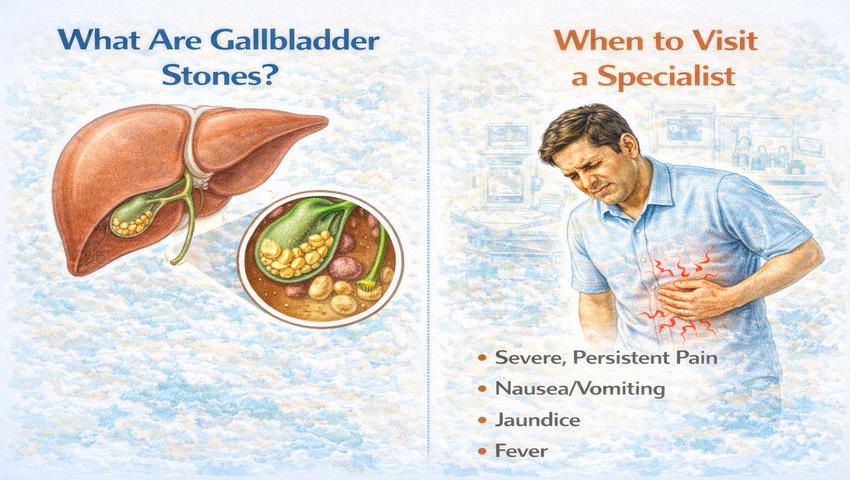
What Are Gallbladder Stones?
Gallbladder stones are hard deposits that form inside the gallbladder due to imbalance in the components of bile—mainly cholesterol, bilirubin, and bile salts.
They can be:
- Cholesterol Stones – Most common
- Pigment Stones – Often linked to liver or blood-related conditions
Stones can be few or many, small or large, and may remain silent for years until they suddenly cause a blockage.
10 Warning Signs You Should Visit an Expert Immediately:
Gallstones may start silently, but when the body begins to react, it sends very clear signals. Ignoring these signs can lead to dangerous complications like infection, jaundice, or pancreatitis.
Here are the 10 warning signs—explained in detail—that mean you should visit a gallbladder specialist immediately:
- Repeated Abdominal Pain After Meals: If you keep getting pain on the right side or upper-middle abdomen after eating oily or heavy foods, it may indicate that stones are blocking the gallbladder temporarily. Repeated attacks mean the condition is worsening.
- Pain That Lasts More Than 1–2 Hours: Normal gas or acidity pain does not last this long. Pain continuing for more than 1–2 hours strongly suggests gallbladder inflammation or duct obstruction, which needs prompt medical evaluation.
- Pain Disturbing Your Sleep at Night: Gallstone attacks often occur during the night or after late dinners. If pain wakes you up from sleep, it is a serious sign of gallbladder distress.
- Persistent Nausea or Vomiting: If you frequently feel like vomiting after meals or during pain episodes, it means the digestive system is struggling because bile flow is blocked.
- Frequent Bloating or Difficulty Digesting Food: Bloating after meals—especially after oily or spicy foods—is a classic sign. This indicates that the gallbladder is not functioning well, and stones may be obstructing bile release.
- Burning Sensation or Acidity That Doesn’t Improve: Acidity caused by gallstones does not get better with normal antacids. A constant bitter taste or repeated acid reflux can indicate bile disturbance due to gallstones.
- Pain Spreading to the Back or Right Shoulder: Gallbladder pain often radiates because the gallbladder shares nerve pathways with the back and shoulder. If your abdominal pain spreads to these areas, it is a warning that a stone may be lodged in a bile duct.
- Yellowing of Eyes or Skin (Jaundice): This is a danger sign. It means a stone has blocked the main bile duct, increasing bilirubin levels. Immediate treatment is required to prevent liver damage or infection.
- Fever Along With Abdominal Pain: This combination indicates infection inside the gallbladder (acute cholecystitis). It can turn into a life-threatening condition if ignored. Urgent medical attention is needed.
- An Ultrasound Report Showing Gallstones: Even if pain is mild or occasional, gallstones do not dissolve on their own. Once detected, consulting an expert ensures timely treatment before complications develop.
Why Choose an Expert Like Dr. K. Balu?
Gallbladder problems require precision, surgical expertise, and correct diagnosis.
Dr. K. Balu, a leading Laparoscopic, Robotic & Gastrointestinal Surgeon in Coimbatore, is widely trusted for advanced gallbladder stone treatment and safe laparoscopic surgery.
Why Patients Trust Dr. K. Balu?
- Expertise in Laparoscopic Gallbladder Removal (Cholecystectomy)
- Thousands of successful gallstone surgeries
- Very low complication rate
- Quick recovery with minimal pain
- Advanced imaging-based diagnosis
- Patient-centred, evidence-based care
Most patients return home within 24 hours after surgery and resume routine activities quickly.
Conclusion:
Gallbladder stones are common in South India, but ignoring early warning signs can lead to serious complications. Knowing when to visit an expert is crucial for preventing emergencies and ensuring safe treatment.
For those experiencing any of the 10 warning signs, consulting an experienced specialist like Dr. K. Balu ensures accurate diagnosis, advanced treatment, and faster, safer recovery.